
Internally Versus Externally Fed Drum Screens: Which One Do You Need?
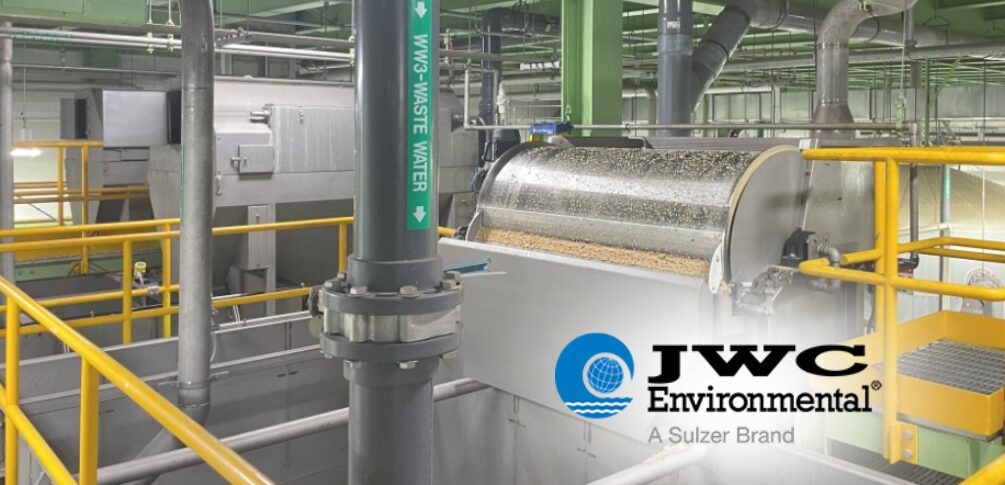
Compact and effective, drum screens are ideal for early-stage fine screening. JWC Environmental often recommends them for larger screening equipment, treatment applications that need more screen area without a bigger footprint, and situations where continuous self-cleaning is necessary to prevent blinding. In municipal headworks, they can be used as either coarse or fine screens, with perforated or wedgewire drums.
There are two primary styles of drum screens: internally fed and externally fed.
In an internally fed screen, a headbox distributes flow into the rotating drum. Liquid passes outward through the media while internal flights carry the captured solids along the drum and discharge them out the end; externally fed designs feature a headbox that spreads the flow across the upper outer surface of the drum. Liquid passes inward through the drum and cascades down through the open interior, while solids are captured on the outside until a fixed doctor blade lifts them off.
Both can be exceptional solids-recovery solutions; the best option depends on your application.
What Are You Processing?
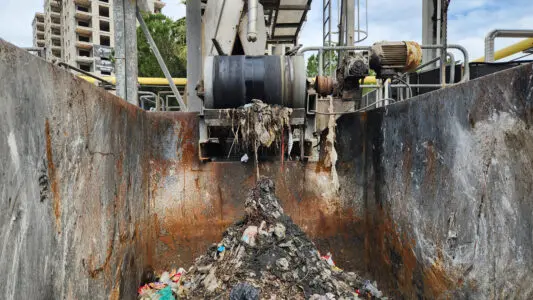
Treatment plants for industrial waste streams, especially food and protein production effluent, have different needs than municipal facilities. High concentrations of fats, oils, and proteins can blind many screening technologies, causing messy overflows and extra labor.
Externally fed drum screens handle high oil and grease loadings and scum applications particularly well. The solids sit on the outside of the drum, and a doctor blade sweeps them off on every revolution, and the water cascading through the drum combines with internal sprays to backwash the media continuously. If you have heavy protein or oil waste, you can also add heated water sprays to loosen the material.
Internally fed screens can work better than externally fed screens for heavy suspended-solids loading and for handling fibrous or bulky material like offal, paunch, and rendering waste because the flights (blades) consolidate solids and send them out the discharge end largely intact.
Is Odor Control a Priority?
If odor control is a priority, internally fed drum screens can work better because the wetted path stays fully enclosed, minimizing the escape of odors. However, both of JWC’s internally and externally fed models can be fitted with covers and hoods when processing mixed sewage streams or waste from animal processing plants.
Is This a Retrofit?
Externally fed screening equipment can work better in retrofit situations where you have little control over how the pipes enter and exit the system. These models are more compact than internally fed designs and can be installed more easily in locations with limited open space. They also work well at a variety of angles, provide options for connecting inlet and outlet pipes in different configurations, and feature customizable screen slot sizes, rotation speeds, and orientations to meet installation limitations and flow demands.
What Is Your Flow Rate?

Internally fed models generally deliver more hydraulic capacity per square foot of footprint because a larger share of the media is wetted at any moment. They also hold some volume inside the drum, which absorbs brief peaks before they affect performance.
Externally fed drum screens can perform more reliably at higher flow rates without backing up. The model’s headbox includes overflow protection that guards against binding, so surges route to overflow rather than blinding the media. Storm surges and processing-driven peaks can be sent to a secondary catchment and returned to the screen once flow normalizes.
Do You Need to Retain Captured Solids?
Byproduct recovery is essential in the screening stages of many industrial wastewater treatment applications. Oils, greases, and protein solids captured from food processing streams can go to rendering, biodiesel feedstock, or anaerobic digestion for biogas, turning a disposal cost into a return.
Internally fed screens can be great if you want the solids captured and conveyed as a stream because the flights deliver the solids out the end of the drum and into an auger, hopper, or press. Comparatively, externally fed drum screens drop doctor-bladed solids straight onto a conveyor or auger, which works well for greasy mats and scum.
What Are Your Maintenance Needs?
Both internally and externally fed designs are low maintenance, but with an externally fed unit, the screening surface faces outward, so inspection and cleaning are more straightforward once the covers are off, while internally fed units keep the media inside the drum, so access is through the drum ends or removable panels, and the external spray bar does most of the routine cleaning automatically.
If your stream is prone to blinding and your team expects frequent hands-on maintenance, externally fed access is likely to be easier for your team.
Need Product Recommendations?
JWC Environmental engineers custom wastewater equipment for a variety of municipal and industrial applications, including poultry processing, biogas, septage and grease receiving, sludge processing, and headworks.
Visit our website to explore our internally and externally fed drum screen models, or contact us today to speak with a JWC representative. Our U.S.-based representatives can recommend products for new construction or retrofit projects, provide on-site integration assistance, and connect you with our support team to request spare parts, field maintenance, and more.