
Grinder Versus Macerator: What’s the Best Fit for Your Plant?
Screening goes a long way in preventing downstream risks, but it can only do so much. If you’ve been struggling to keep clogging under control or find your crew manually cleaning the screens too often, it’s likely time to add a solids reduction unit to your facility.
Grinders and macerators are both used to break down solid waste, but they’re not the same, even though the terms are often used interchangeably. Both work best when integrated early into the treatment process, and you may need both at different stages.
Defining Grinder
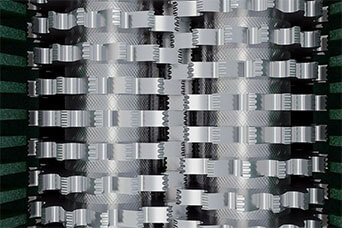
Grinders typically feature twin shafts fitted with intermeshing cutters that rotate toward each other, shearing solids between them. They operate at a slower speed with higher torque, making them ideal for shredding tough, fibrous materials, including rags and wipes.
However, one major limitation when using a grinder is the size of the finished material. Large items like shoes or food packaging may be torn into pieces, but those pieces may remain large or long enough to tangle later in the treatment process. That means they’re often used very early in the headworks, sometimes paired with or ahead of screening, to give the system a chance to capture these pieces and remove them. Grinders can safely run dry, are available for open channels, wet wells, and inline pipe installations, and generally don’t include a debris trap to collect rocks and metal.
Defining Macerator

A macerator is a single-shaft unit that spins a cutter head against a stationary cutting screen or plate to provide a scissor-like cut. It operates at higher speed with lower torque and requires a constant wet stream. It’s typically reserved for processing sludges and thicker slurries that still contain rags and fibrous materials, which can wrap pump rotors and clog heat exchangers, centrifuges, and other downstream equipment.
You’ll typically find macerators on sludge lines ahead of pumps, digesters, and dewatering equipment, not in the main raw wastewater channel. They reduce fouling and clogging, and many feature a debris trap where stones, soda cans, and other materials that can’t be cut down settle out for easy removal.
Determining Which One Is Needed
Macerators and grinders process debris differently, and each fits different points in a plant. Many facilities will likely need both types of solid reduction equipment in different parts of the process.
When identifying which equipment to buy and where to place it in your process, ask these questions:
Where Are You Processing Materials?
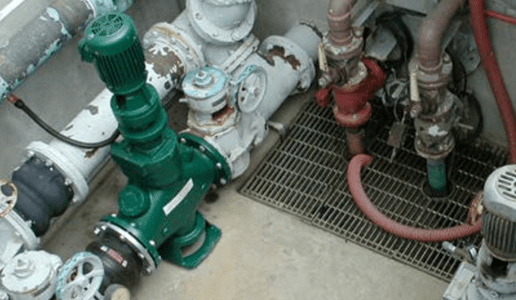
Grinders fit into open channels, wet wells, lift stations, and pipelines. They’re great for handling unpredictable debris and variations in materials and sizes, and can run dry without damage or resets.
Comparatively, macerators are designed to connect to a closed pipeline, where they’re supplied with a constant wet stream that keeps cutting even, prevents overheating, and maintains pressure so the slurry flows smoothly. Because converting open channels to closed pipelines in existing facilities is often difficult, choose a solids processing unit that fits your current layout.
What Particle Size Do You Need Downstream?
At every point you need to add solids processing, consider what the downstream equipment can tolerate. For example, if you’re breaking down large rags and bits of wood in a raw wastewater channel or before a pump station, a grinder is likely the best choice for coarse reduction. But if you’re protecting sludge pumps, heat exchangers, centrifuges, or digesters from rag buildup, a macerator provides the finer, more uniform particle sizes those systems need.
Ahead of fine screens and membrane systems, the goal isn’t just reducing particle size, but removing fibers. Chopped hair and rag fibers can slip through screens and re-form into ropes on membranes and other sensitive equipment, so these systems are best protected by fine screening.
Are You Processing Raw Wastewater or Sludge?
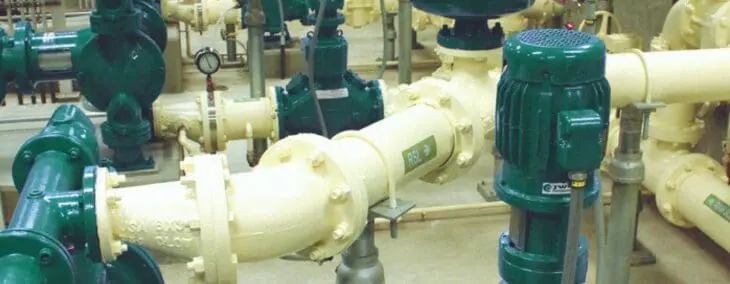
Grinders typically handle raw wastewater best. The twin-shaft design can break up large, hard, and unpredictable solid materials. Macerators handle thicker sludges better, even when they contain partially broken-down solids still large enough to cause clogs or cover surfaces. Where grinders are paired with screening, they typically work alongside coarse screens at the headworks, while macerators are usually found on sludge lines after screening and primary treatment.
What Is the Processing Goal?
Not all solids reduction equipment provides the same processing effect. For protecting pumps and preventing clogs at the headworks and in lift stations, you’ll find the best results from grinders. When you need to condition sludge, protect pumps, and produce a more consistent feed for digestion and dewatering, you’ll also need macerators. Macerators can’t handle the same raw and large debris that grinders can, so they’re best applied to streams where those large solids have already been removed, but rags and fibers remain.
Some Facilities Need Both

In most cases, choosing between macerators and grinders isn’t an either-or situation. Both types of solids processing equipment are designed to protect the wastewater treatment system from clogging, damage, and overflows. While they may have similar functions, they’re ultimately used for different applications and often work together at different points in the same plant.
For example, a municipal wastewater stream is often contaminated with wipes, food containers, discarded clothing, and combined sewer systems can pick up plant debris washed in by storms. A grinder at the headworks is a better choice for chewing up a dropped sock and a tree branch, but it still produces splinters and long bits of fiber.
At that point, screening removes what it can. Fibers and rags that get past screening can settle with the solids and end up in the sludge, where they can cause clogs and pump damage. Adding a macerator on the sludge line breaks down those remaining bits of sock and splintered wood, protecting pumps and producing a more consistent feed. Each facility is different, and you may need additional solids reduction further downstream if debris is reintroduced through recycle or side streams.
Find the Right Solutions for Your Facility
JWC Environmental has spent over four decades building some of the most reliable wastewater grinding equipment available on the market today for municipal and industrial applications. Each model is engineered to overcome modern wastewater challenges, and as newer problems emerge, we develop newer models to address them.
If you’re experiencing issues in your facility, whether it’s retrofitting aging infrastructure or resolving constant clogging, contact us today to schedule a consultation with our experts. We provide both remote and on-site assistance.