
Rethinking The Role Of Grinders In Today’s Collection Systems
Most existing wastewater infrastructure is not designed for modern waste streams. The proliferation of low-flow toilets and the massive increase in “flushable” wipes means today’s flows contain much greater loading of more challenging solids. If not properly dealt with, these solids can damage equipment, clog pumps, and cause unplanned shutdowns, which can result in high labor costs and even regulatory fines. Grinders have long been recognized as a solution to high solids loading, but many wastewater systems (as well as grinder manufacturers) take a one-size-fits-all approach. Not only should grinders be engineered for the specific wastewater compositions, but they should also be installed at the most critical points to best protect equipment and treatment processes.
Tailoring Teeth For Toughness
Many manufacturers only offer monolithic grinders; in other words, the cutters have been precast and machined as a single solid piece. This process results in teeth with large tolerances that may bend or tear fabrics and other solids rather than shredding them. In addition, because they are a single unit, they are less adaptable to specific waste streams. The leading grinders in the market utilize cutting stacks with individual cutters and spacers. This allows for tight, controlled tolerances and the ability to customize the type of cutters used throughout the grinder.
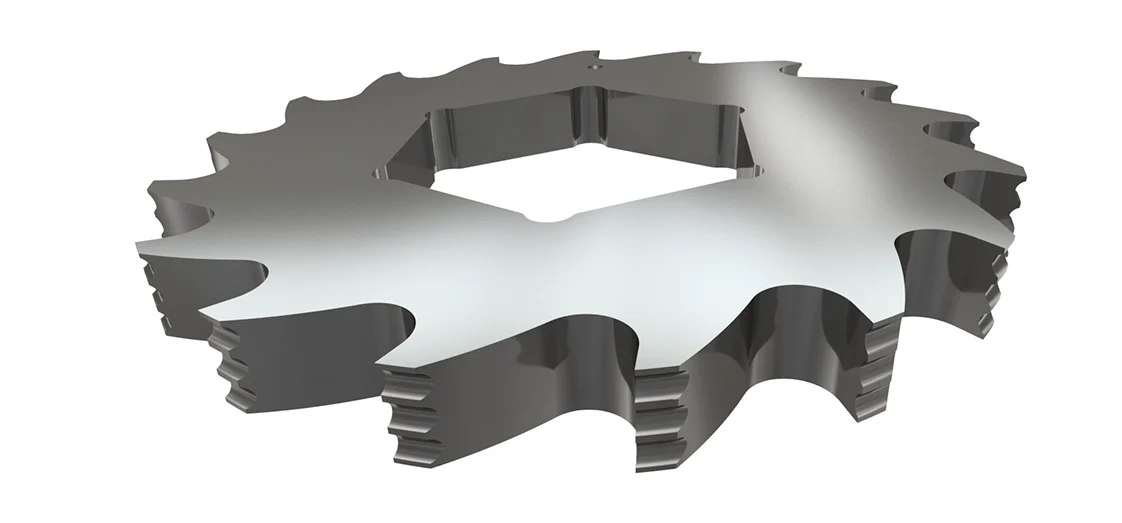
Moreover, most grinders use a balanced 11-tooth cutter configuration. However, heavier, denser, and more voluminous solids demand a low-tooth profile. The fewer cutter teeth a grinder has, the more power it can exert on dense objects. The downside is that fewer teeth produce larger particles. Smaller utilities with more sensitive downstream pumps and valves will need smaller particle sizes. This can be satisfied with a high-tooth cutter profile, such as a 17-tooth disk.
Understanding Stack Geometry
Also important is how the entire cutter stack is assembled. High-performance cutters typically use an odd number of teeth, allowing them to be rotated as they are stacked on the dual-shaft gear reducer. When viewed straight on, the cutter face forms distinct geometric patterns — such as parallel lines, an X, or a V — directly into the profile of the stack. This spreads the incoming solid load evenly across the entire stack length, preventing localized wear and maximizing grinding effectiveness.
Cutter configuration can also be varied by zone within the grinder. While the submerged portions of the stack tackle rags and dense debris, the top of the cutter stack faces changing conditions. As water levels naturally rise and fall throughout the day, these cutters are alternately exposed to air and corrosive sewer gases. As such, modern grinders should use stainless steel cutters at the very top of the stack to mitigate corrosion and extend the life of the unit.
Wiping Out Flushable Wipes
Today’s waste stream has been deeply disrupted by the rapid proliferation of so-called flushable wipes. Traditional grinder designs struggle with these stringy, synthetic materials, which can bend or weave through loose tolerances. As such, new grinder configurations maintain ultra-tight tolerances and advanced cutter geometry. By deploying specialized thin cutters, operators can tightly control the width of the shredded output, ensuring that persistent synthetic fibers are ground small enough to reduce the risk of re-coagulating downstream.
Beyond Headworks: Strategic Placement
Historically, high-torque grinders are installed at treatment plant headworks. However, this leaves vulnerabilities across the rest of the collection system. Installing grinders at remote pump stations throughout the collection network provides critical protection for localized lift station pumps, preventing the expensive emergency cleanouts that wreak havoc on municipal budgets.
In addition, grinders do not have to operate in a technical silo. For large channels and peak-flow volumes, combining screening with downstream grinders can offer maximum protection. The bar screen captures and removes bulk organic debris during heavy storm events, while the grinder processes smaller challenging solids.
The True Cost Of Protection
Many engineers and wastewater managers hesitate to invest in grinders because they worry about high maintenance costs. However, this ignores the broader financial picture. A grinder can deliver a net-negative maintenance profile by shielding downstream infrastructure from catastrophic failure. The cost of maintaining a customized grinder is miniscule compared to the expense of regularly pulling clogged pumps, repairing damaged valves, paying for emergency overtime labor, or facing steep regulatory fines from sewer overflows.
Moreover, modern cartridge-style designs have significantly rewritten the rules of grinder maintenance. Rather than pulling an entire unit apart and rebuilding a complex dual-shaft stack piece by piece, operators can rapidly swap out the wear components as a single preassembled cartridge. This drastically cuts down servicing downtime while ensuring the grinder remains online.
As wastewater challenges grow more complex, a one-size-fits-all approach to grinding is no longer sufficient. Utilities that invest in customized, strategically placed grinders — engineered for their specific waste streams — protect critical infrastructure, reduce emergency costs, and ensure reliable, compliant operations well into the future.