

Properly Sizing Your Wastewater Screening Equipment
Wastewater screens must be properly sized for the application.
Without adequate screening early on in the treatment process, materials like rags, wipes, and plastics pass downstream and foul pumps, clog piping, and bind up mixers and heat exchangers, resulting in labor-intensive maintenance and upstream backups and overflows during peak periods.
Both undersizing and oversizing carry different risks. An undersized screen blinds off and can flood the channel or force debris through the openings, while an oversized screen wastes money and runs at velocities too low to keep grit moving.
Sizing a screen requires an understanding of the system’s hydraulic profile, your debris load, capture rate, and the geometry of the channel the equipment will sit in.
When you’re performing an application review and comparing different screening equipment, make sure to ask these questions:
What Is Your Peak Flow Rate?
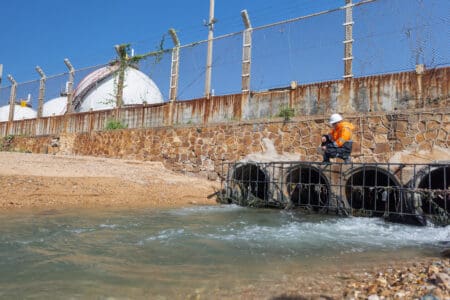
The flow rate affects the size of the entire screening unit, including channel width and depth, screen area, and cleaning cycle frequency. If the screening equipment is undersized, overflows can occur, causing trash to bypass the screens and enter the treatment system. However, if you oversize your screens to compensate for the high peak flows, you’re stuck with grit settling out of the waste stream.
Base your sizing on measured flow data, including dry weather, peak hour flow, and peak wet weather flow, then size for firm capacity (the remaining screens must pass peak wet weather flow with the largest screen out of service).
Any headworks sized for peak wet weather will run slower in dry weather, but multiple parallel channels allow operators to take certain units offline during these dry periods. Additionally, self-cleaning screens (with level or differential-triggered cycles) can help with “first flush” loads that can strain screening equipment and increase the chance of clogs when incoming water levels are still rising.
What Do Your Downstream Processes Require?
Screening is the first barrier, and everything behind it inherits whatever gets through. Membrane bioreactors are the most demanding, followed by digesters, heat exchangers, and sludge pumps. Include any future upgrades that are being planned.
Knowing what equipment needs protection determines opening size, which influences headloss, screen area, screenings volume, and handling equipment.
What Types of Materials Are Being Screened?

Most wastewater applications receive streams that contain everything from large objects like soda cans to fine fibers, which is why coarse screens remove larger debris while fine screens are sized to what the downstream process requires.
If space is tight, multi-stage packaged units can handle both stages of screening in a single footprint. JWC offers several models that combine grinding and fine screening in the same unit, with screen baskets available in multiple opening sizes.
What Is Your Allowable Headloss?
Fine screens generate more headloss than coarse bar screens, and any screen’s headloss rises sharply as it blinds. Moving to coarser openings reduces headloss, but also reduces capture, increasing the risk of passing more rags, wipes, and fibrous material downstream. We recommend sizing for a specified blinding condition rather than clean-screen headloss.
You can determine allowable headloss based on your hydraulic profile. Work backward from the elevation of the incoming sewer crown and the required freeboard in the channel.
What Is the Approach Velocity to the Screen?
Approach velocity must stay high enough to keep grit and sand moving through the channel to the grit removal process, but through-velocity must stay low enough that captured material isn’t forced through the openings or stripped off the debris mat before the rake or auger can remove it.
Calculate your approach velocity as flow divided by the wetted cross-sectional area of the channel (the product of channel width and water depth). A minimum approach velocity of 1 ft/s helps keep grit in suspension, and a maximum through-screen velocity of 3-4 ft/s at peak flow prevents materials from passing through the screen and into the waste treatment plant.
What Is the Expected Loading Rate?
Opening size influences screenings volume, and loading can’t be estimated until the opening size is determined.
The collection system drives screenings loading and can be predicted by looking at the ratio of combined to separate sewers, the level of infiltration and inflow, the age and condition of the system, and rainfall.
Higher loading generally requires more cleaning cycles and handling capacity. Screening handling should be sized for wet weather, not average conditions.
Where Is the Screening Equipment Being Installed?
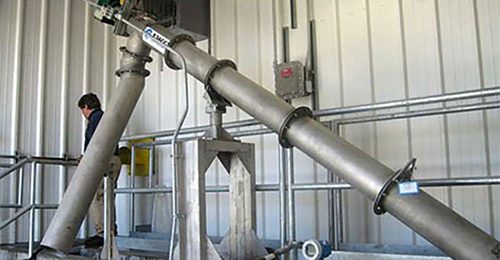
Some screening equipment is too large for installs in smaller wastewater facilities or those with limited space.
Compact solutions do exist, so there’s never any need to settle for screening that isn’t designed for your treatment process.
Multi-rake designs, step screens, and band screens maximize screening area within a small plan area by using a steeper or vertical orientation.
For example, JWC Environmental’s Vertical Auger Monster mounts to the wall of a pump station or wet well and combines a grinder, fine screen, auger washing, and compaction in one unit, allowing the capture and disposal of rags and wipes without a separate conveyor.
Measure your existing channel width, water depth, invert elevation, and top-of-slab elevation, and allow clearance to withdraw the screen, auger, or rake assembly for maintenance.
Need Help Sizing Your Wastewater Screening?
Keeping processes as efficient as possible is a goal for most municipal wastewater plants, and part of that starts with ensuring the screening equipment is sized properly.
The screening equipment you install should effectively remove common debris in your waste stream, reduce inorganic materials, prevent clogs, protect downstream equipment, and lower maintenance costs.
JWC Environmental has been helping wastewater facilities across the U.S. overcome new and existing challenges. Our wastewater screening equipment is custom-engineered to meet application requirements, and our knowledgeable product specialists can help you specify the right model. Visit our website to learn more about our municipal screening equipment, or contact us today to speak with a JWC representative.