How Cutter Choice and Placement Impact Wastewater Grinder Performance
| By JWCE | 0 Comments

| By JWCE | 0 Comments
| By JWCE | 0 Comments
| By JWCE | 0 Comments

| By JWCE | 0 Comments
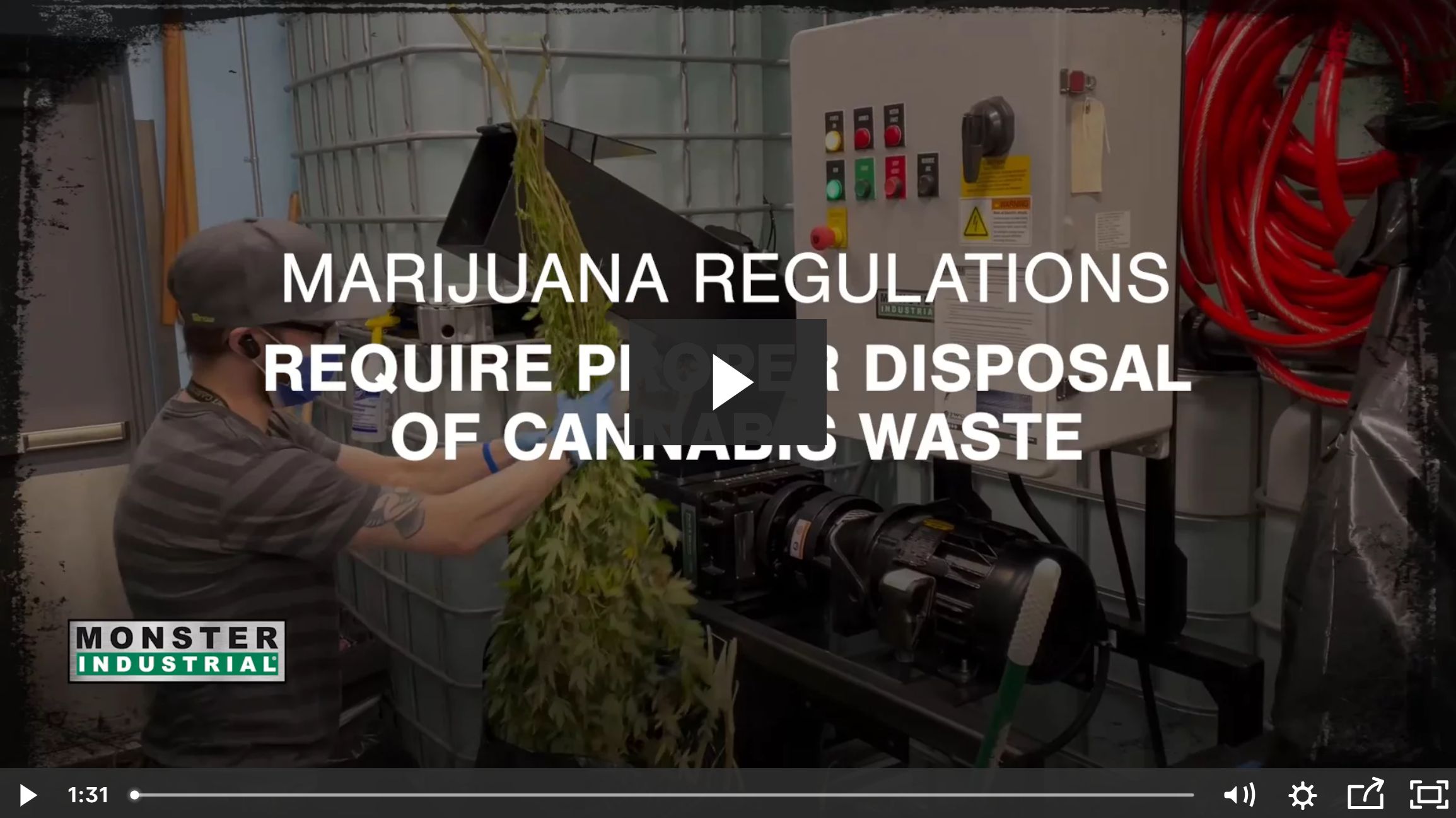
See how Monster Industrial Shredders shred cannabis plant waste easily and effectively to meet marijuana waste disposal regulations. Visit our Marijuana Plant Waste page to learn more about the process!
| By JWCE | 0 Comments
| By JWCE | 0 Comments
| By JWCE | 0 Comments
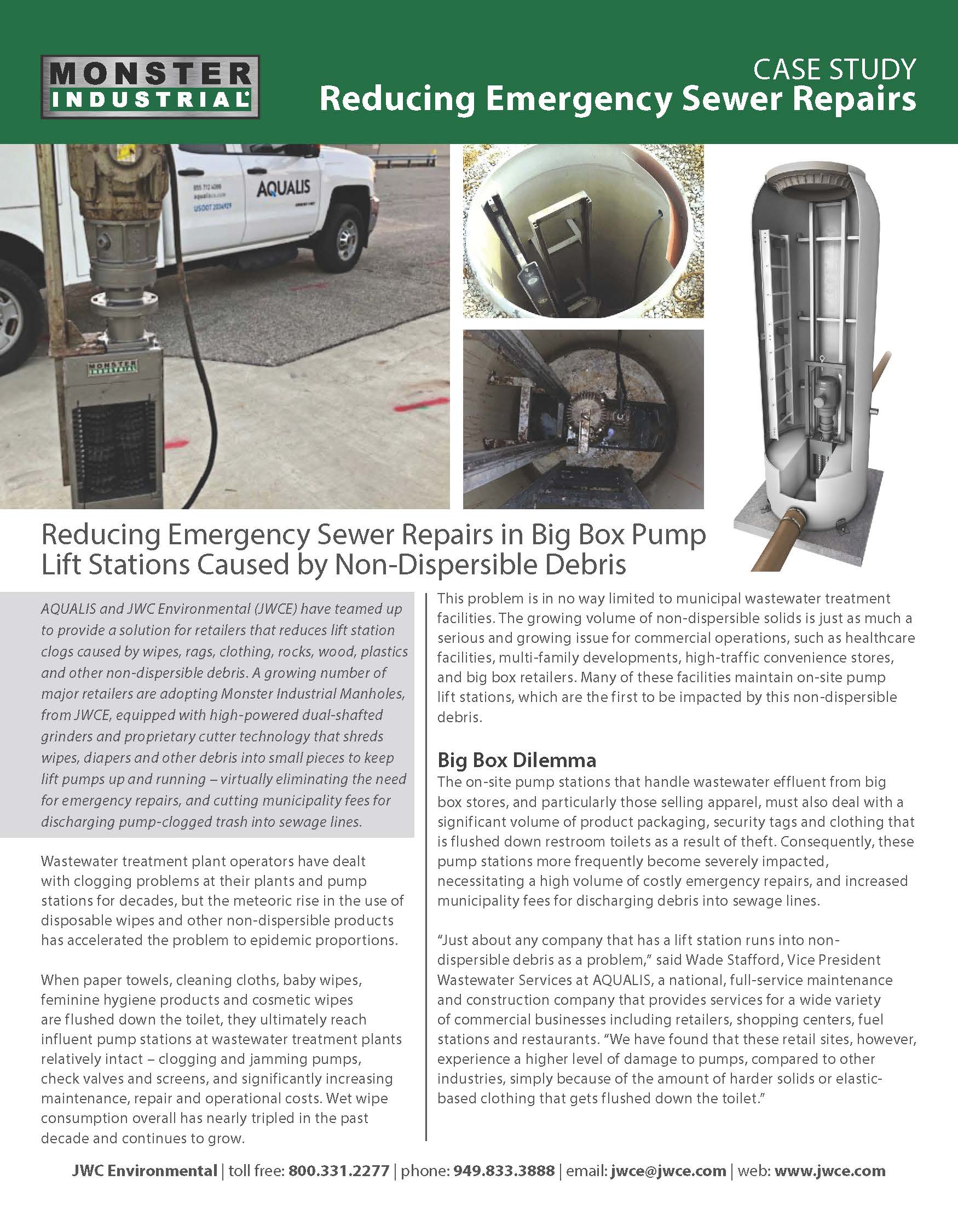
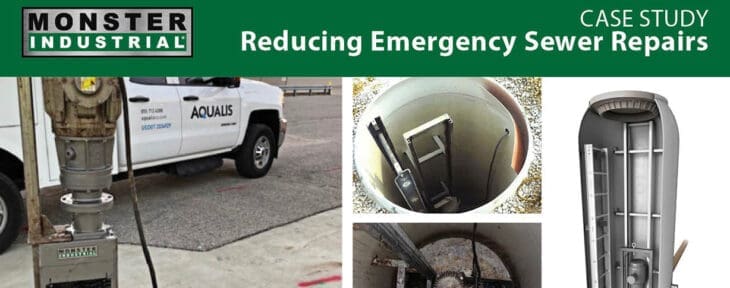
AQUALIS and JWC Environmental (JWCE) have teamed up to provide a solution for retailers that reduces lift station clogs caused by wipes, rags, clothing, rocks, wood, plastics and other non-dispersible debris. A growing number of major retailers are adopting Monster Industrial Manholes, from JWCE, equipped with high-powered dual-shafted grinders and proprietary cutter technology that shreds wipes, diapers and other debris into small pieces to keep lift pumps up and running – virtually eliminating the need for emergency repairs, and cutting municipality fees for
discharging pump-clogged trash into sewage lines.
Wastewater treatment plant operators have dealt with clogging problems at their plants and pump stations for decades, but the meteoric rise in the use of disposable wipes and other non-dispersible products has accelerated the problem to epidemic proportions.
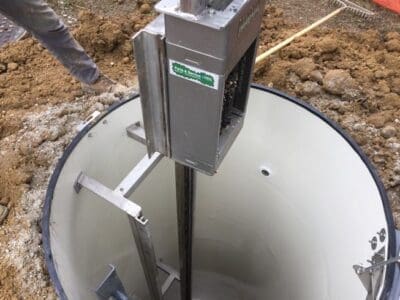
This problem is in no way limited to municipal wastewater treatment facilities. The growing volume of non-dispersible solids is just as much a serious and growing issue for commercial operations, such as healthcare facilities, multi-family developments, high-traffic convenience stores, and big box retailers. Many of these facilities maintain on-site pump lift stations, which are the first to be impacted by this non-dispersible debris.
Servicing one of the world’s leading retailers, AQUALIS was tasked with finding alternative solutions to the non-dispersibles problem.
Curious to see their solution? Read the full story here.
| By JWCE | 0 Comments
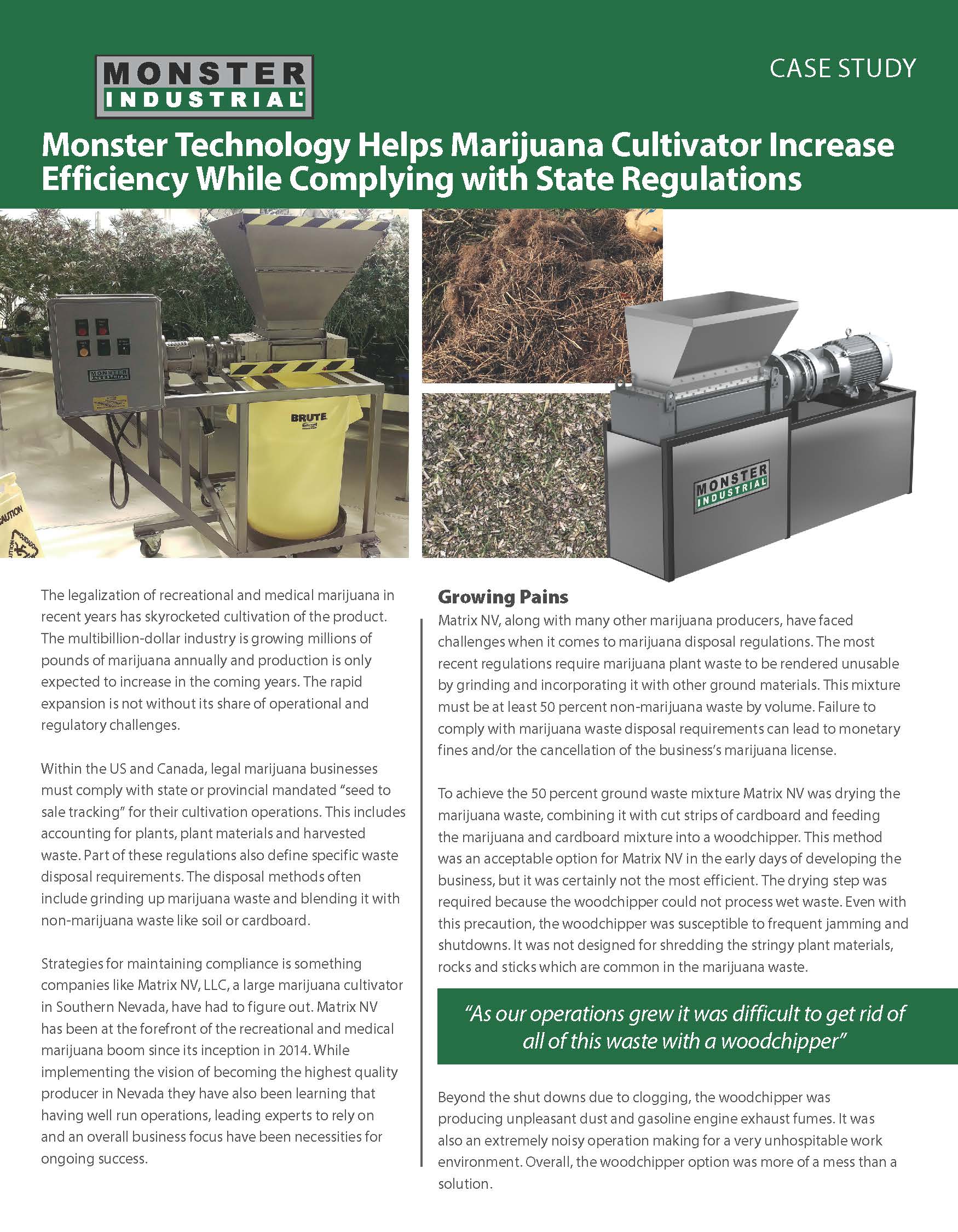
The legalization of recreational and medical marijuana in recent years has skyrocketed cultivation of the product. The multibillion-dollar industry is growing millions of pounds of marijuana annually and production is only expected to increase in the coming years. The rapid expansion is not without its share of operational and regulatory challenges.
Within the US and Canada, legal marijuana businesses must comply with state or provincial-mandated “seed to sale tracking” for their cultivation operations. This includes accounting for plants, plant materials and harvested waste. Part of these regulations also defines specific waste disposal requirements. The disposal methods often include grinding up marijuana waste and blending it with non-marijuana waste like soil or cardboard.
Strategies for maintaining compliance are something companies like Matrix NV, LLC, a large marijuana cultivator in Southern Nevada, have had to figure out. Matrix NV has been at the forefront of the recreational and medical marijuana boom since its inception in 2014.
“As our operations grew it was difficult to get rid of all of this waste with a woodchipper”
| By JWCE | 0 Comments
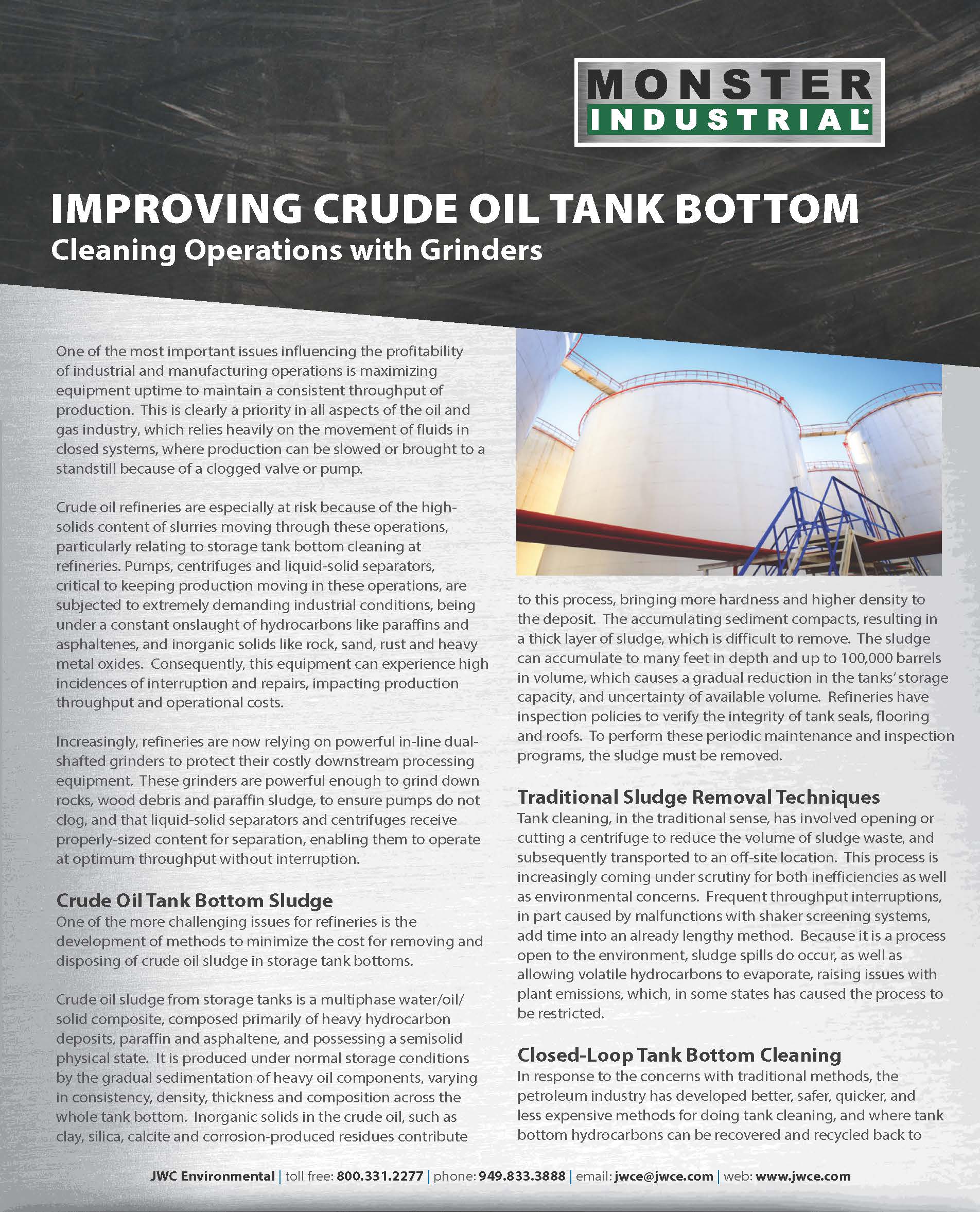
One of the most important issues influencing the profitability of industrial and manufacturing operations is maximizing equipment uptime to maintain a consistent throughput of production. This is clearly a priority in all aspects of the oil and gas industry, which relies heavily on the movement of fluids in closed systems, where production can be slowed or brought to a standstill because of a clogged valve or pump.
Crude oil refineries are especially at risk because of the high solids content of slurries moving through these operations, particularly relating to storage tank bottom cleaning at refineries. Pumps, centrifuges and liquid-solid separators, critical to keeping production moving in these operations, are subjected to extremely demanding industrial conditions, being under a constant onslaught of hydrocarbons like paraffin and asphaltenes, and inorganic solids like rock, sand, rust and heavy metal oxides. Consequently, this equipment can experience high incidences of interruption and repairs, impacting production throughput and operational costs.
Increasingly, refineries are now relying on powerful in-line dual shafted grinders to protect their costly downstream processing equipment. These grinders are powerful enough to grind down rocks, wood debris and paraffin sludge, to ensure pumps do not clog, and that liquid-solid separators and centrifuges receive properly sized content for separation, enabling them to operate at optimum throughput without interruption.
Want to learn more? Read the full story HERE!